
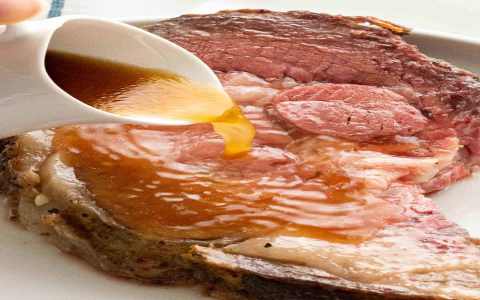

Roasted and Reverse Seared Prime Rib
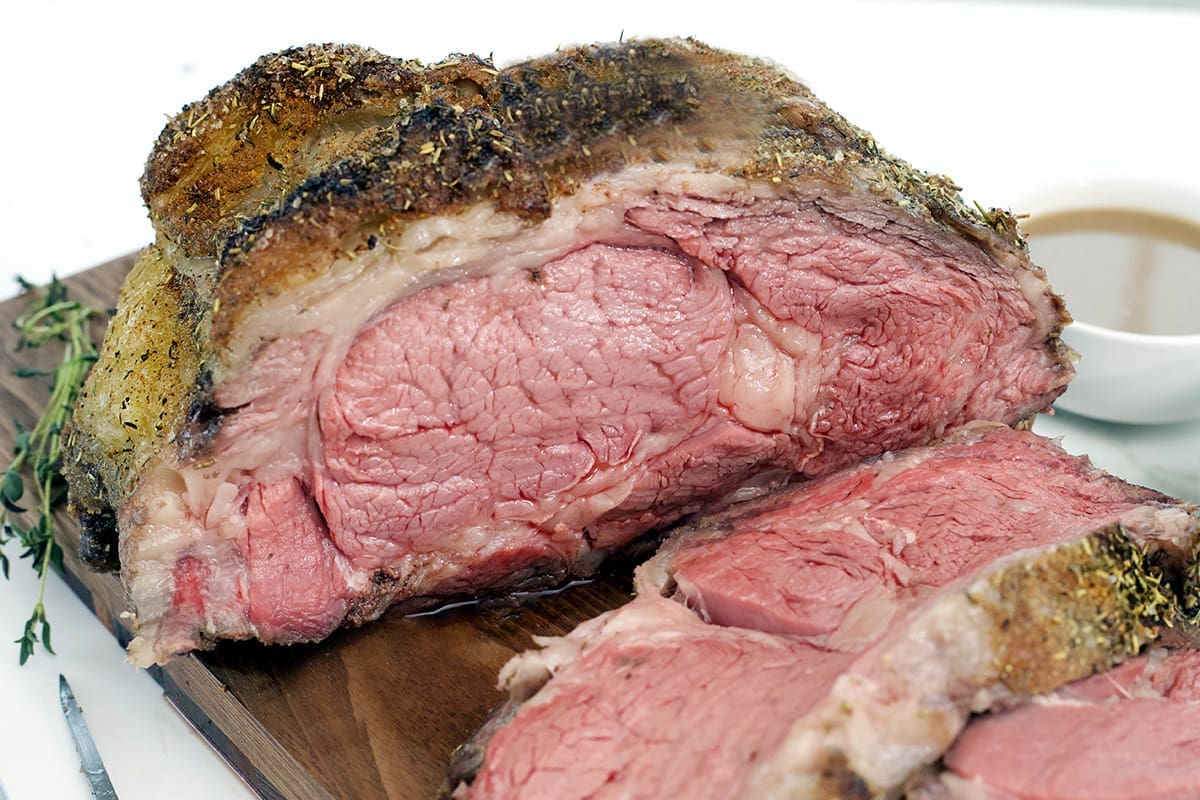
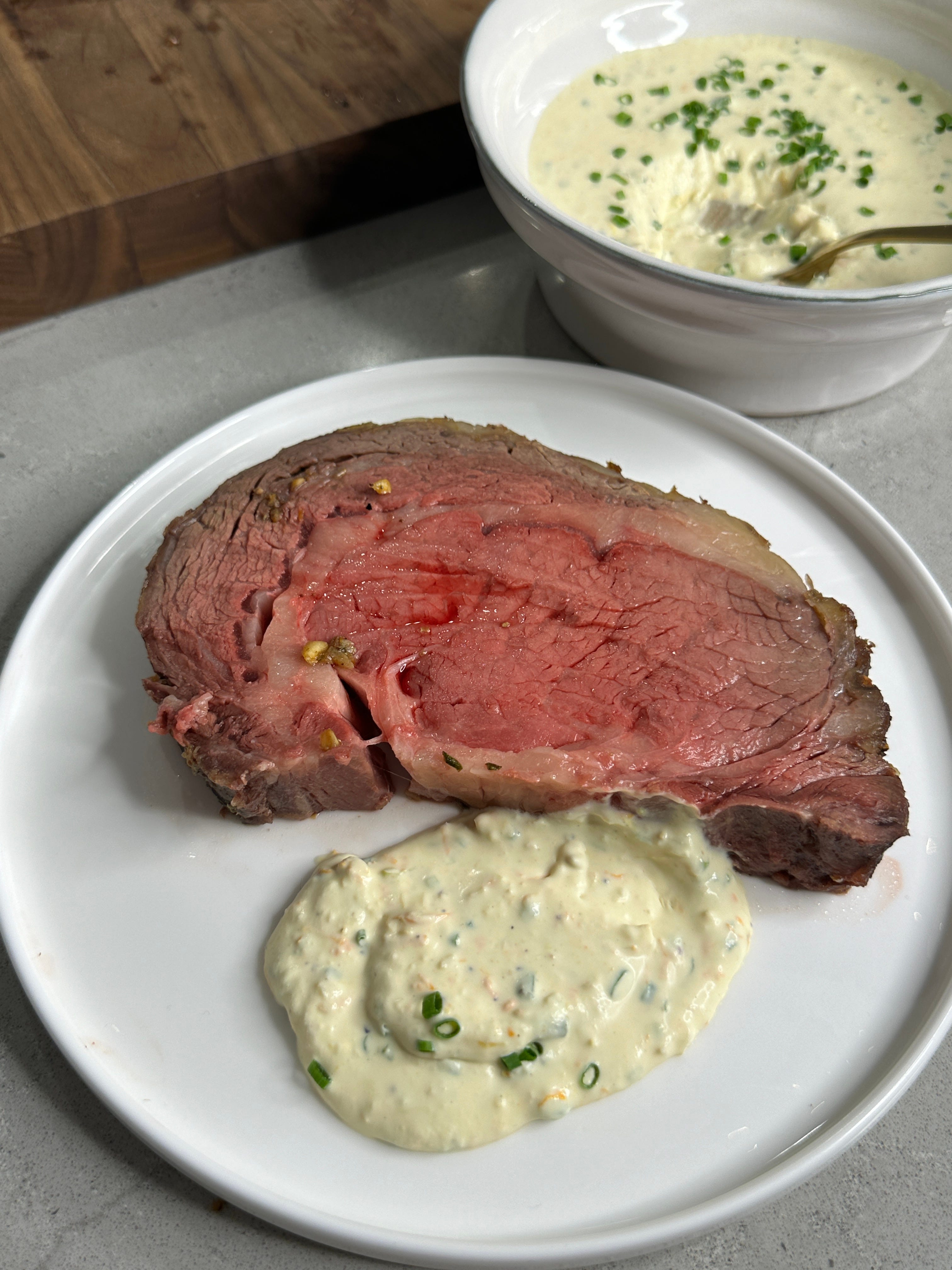
Achieve the juiciest, most flavorful prime rib roast with a simple two-step method: cook low and slow to lock in tenderness, then finish with a high-heat blast for a crisp, golden crust. This reverse-sear technique ensures even doneness from center to edge, with no gray overcooked meat and maximum juiciness.
Prime Rib Basics
Prime rib is an investment—you don’t want to mess it up. As someone who values every dollar spent on good food, I’ve tested countless methods to ensure perfect results every time. Here’s what you need to know:
Choose bone-in, well-marbled beef: Bones regulate temperature, giving you more tender, medium-rare meat. Marbling (intramuscular fat) adds richness and tenderness—look for a white, spiderweb-like pattern in the meat.
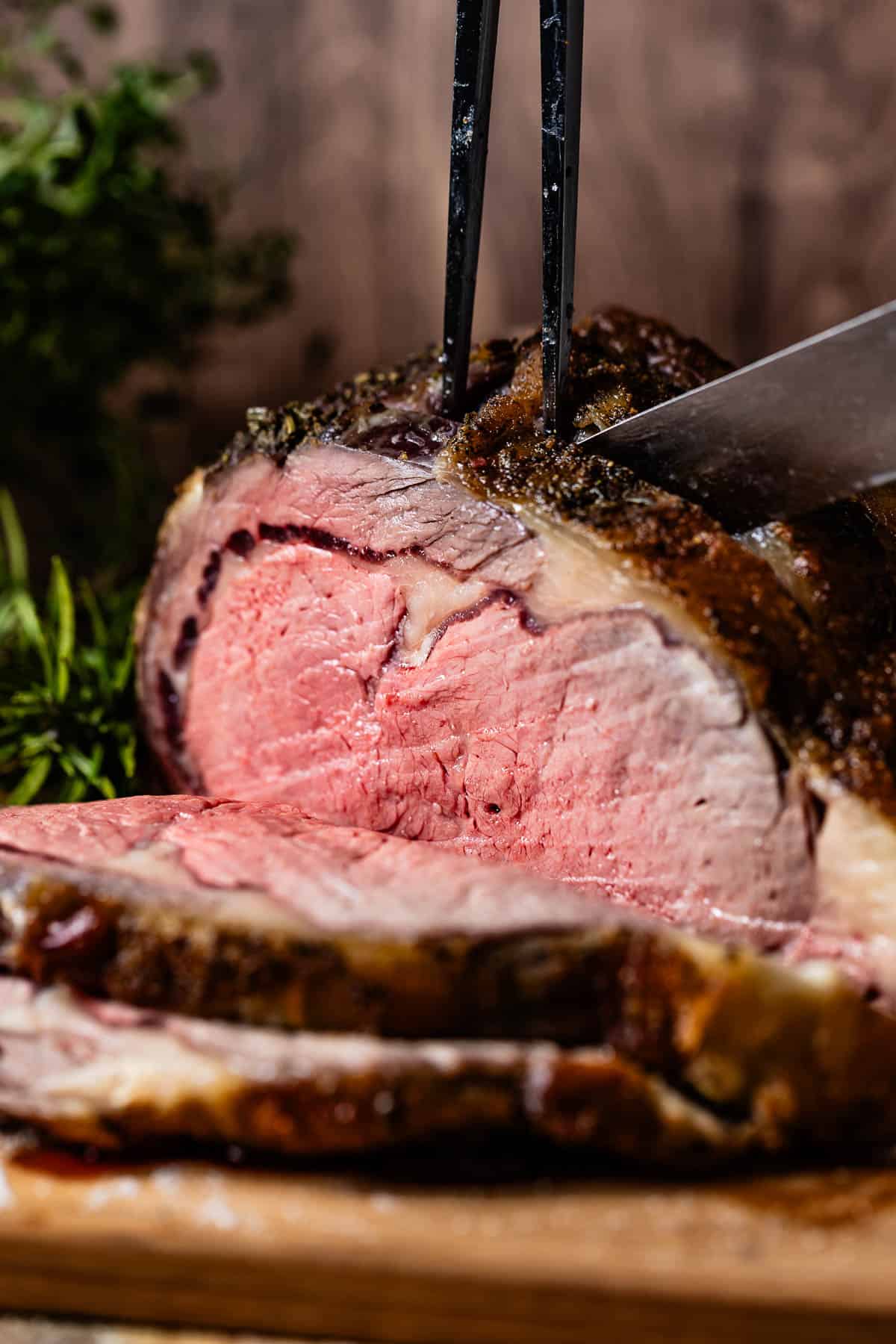
Serving size: Plan on ¾ pound per person (or one rib for every three people) instead of the usual 1 pound—save room for sides.
Season generously, early: A heavy sprinkle of salt and pepper is enough. For deeper flavor and a crispier crust, salt the roast 1–4 days ahead, letting it sit uncovered on a rack in the fridge.
Don’t undercook: Well-marbled prime rib shines at medium-rare (minimum) or medium. Lean cuts dry out at higher temps, but fatty cuts need heat to render fat, releasing flavor and juiciness. In taste tests, most people preferred medium-rare—even self-proclaimed rare lovers!
On Dry-Aging
For the ultimate prime rib experience, go with dry-aged beef. It’s expensive (commercially aged costs $25–$30 per pound), but the flavor and tenderness are unmatched. Dry-aging uses enzymes to tenderize and controlled bacterial action to add nutty, sweet notes—even hints of Parmesan or blue cheese if aged 28+ days.
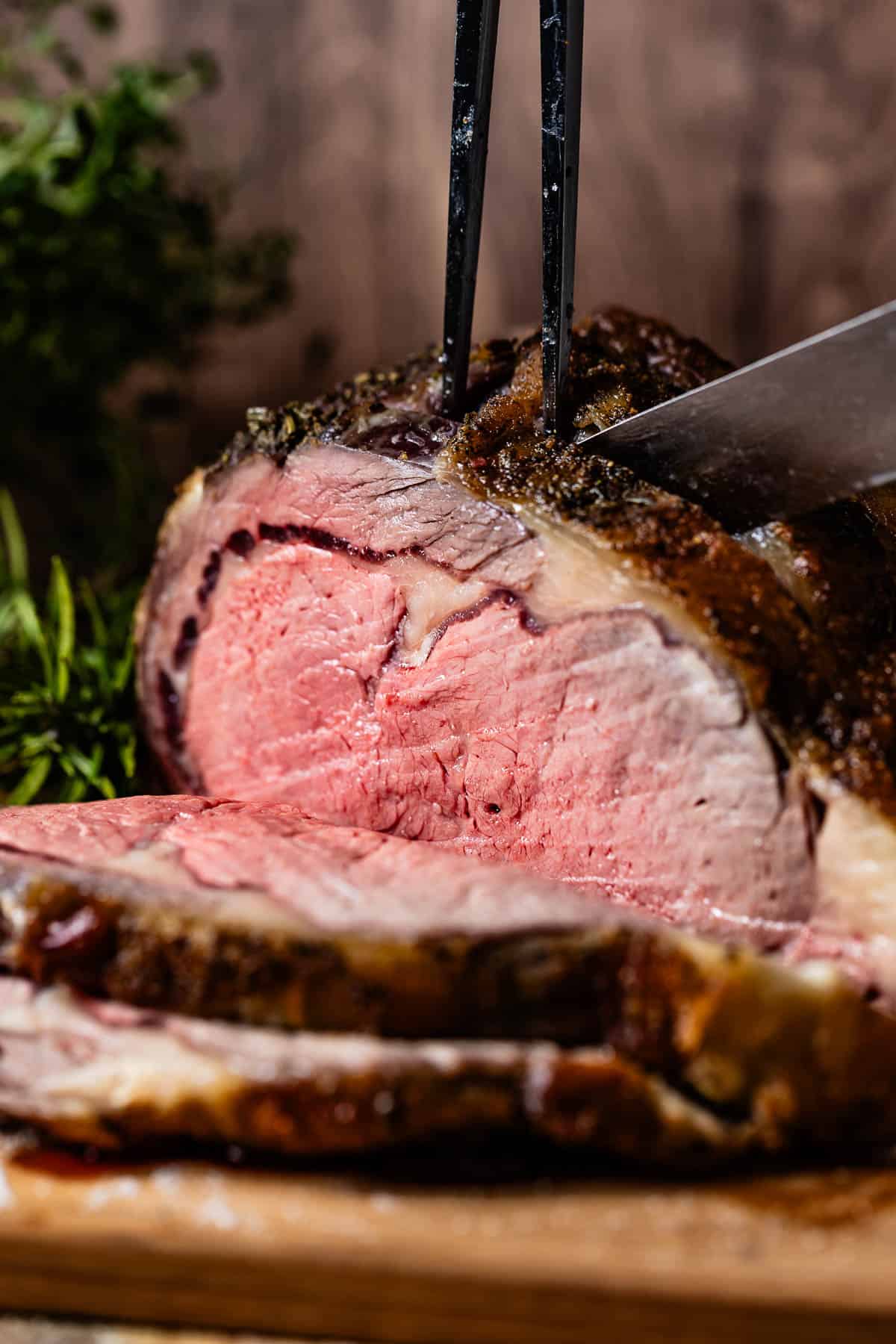
Home aging requires equipment (like a mini fridge with a fan) and patience, but two products stand out:
– SteakAger PRO 15: A small stainless steel box that fits inside a normal fridge, with a fan, temperature/humidity monitors, and a UV light. Great for aging three ribs at a time.
– Steak Locker: A dedicated aging fridge with a fan, UV light, and salt trays for humidity control. It pairs with a smartphone to alert you to temperature/humidity issues and costs around $1,500—worth it for frequent dry-agers (pays for itself after 150 pounds of beef).
Neither gadget is essential, but both are effective.
The Prime Rib Commandments
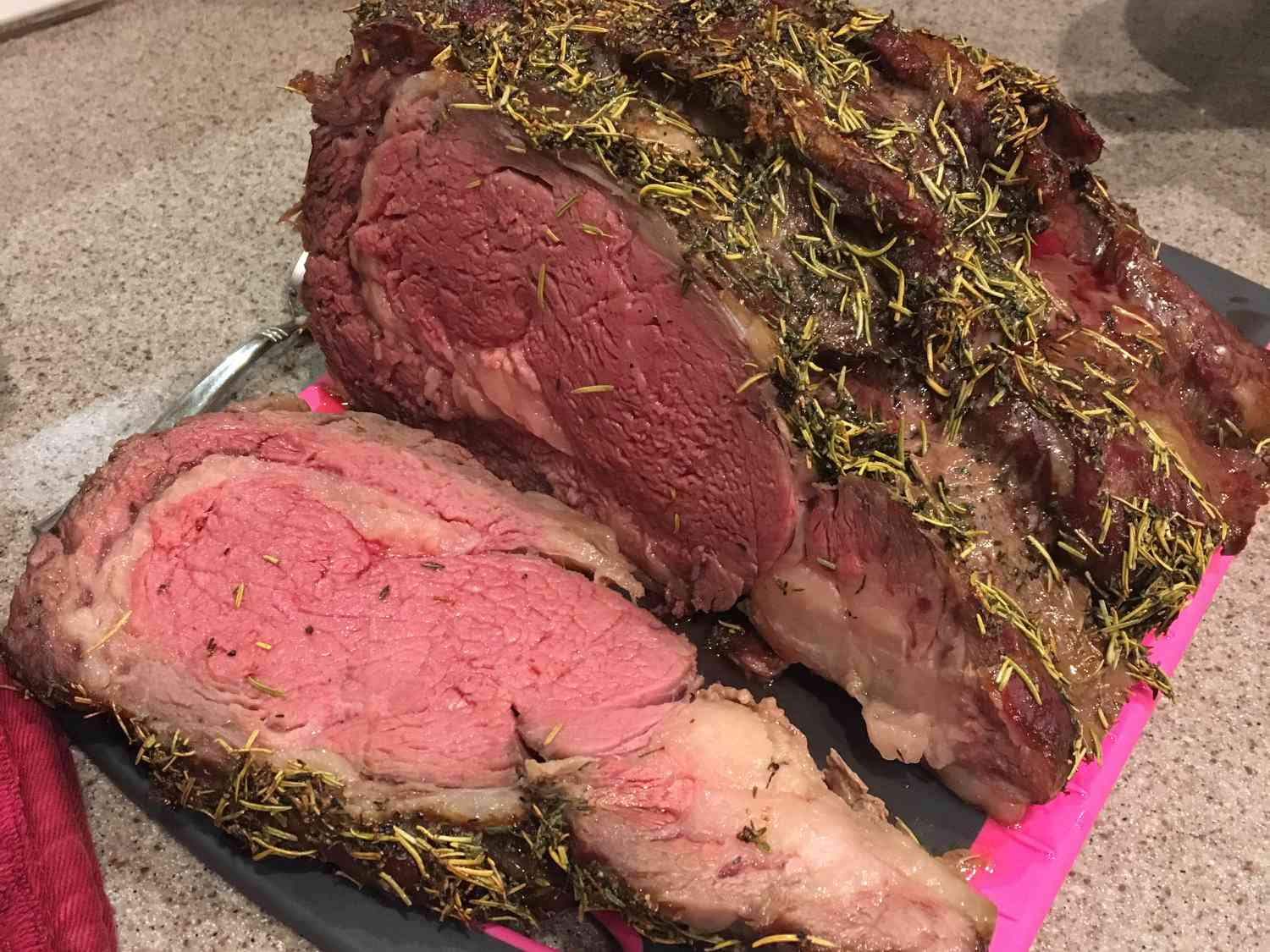
To achieve prime rib perfection, follow these three rules:
1. A deep, crisp, salty crust on the exterior.
2. Minimal gray overcooked meat between the crust and medium-rare interior.
3. Maximum juiciness retained.
Bonus: No specialized equipment needed—skip torches, sous-vide, or fancy ovens.
Temperatures for Medium-Rare Prime Rib
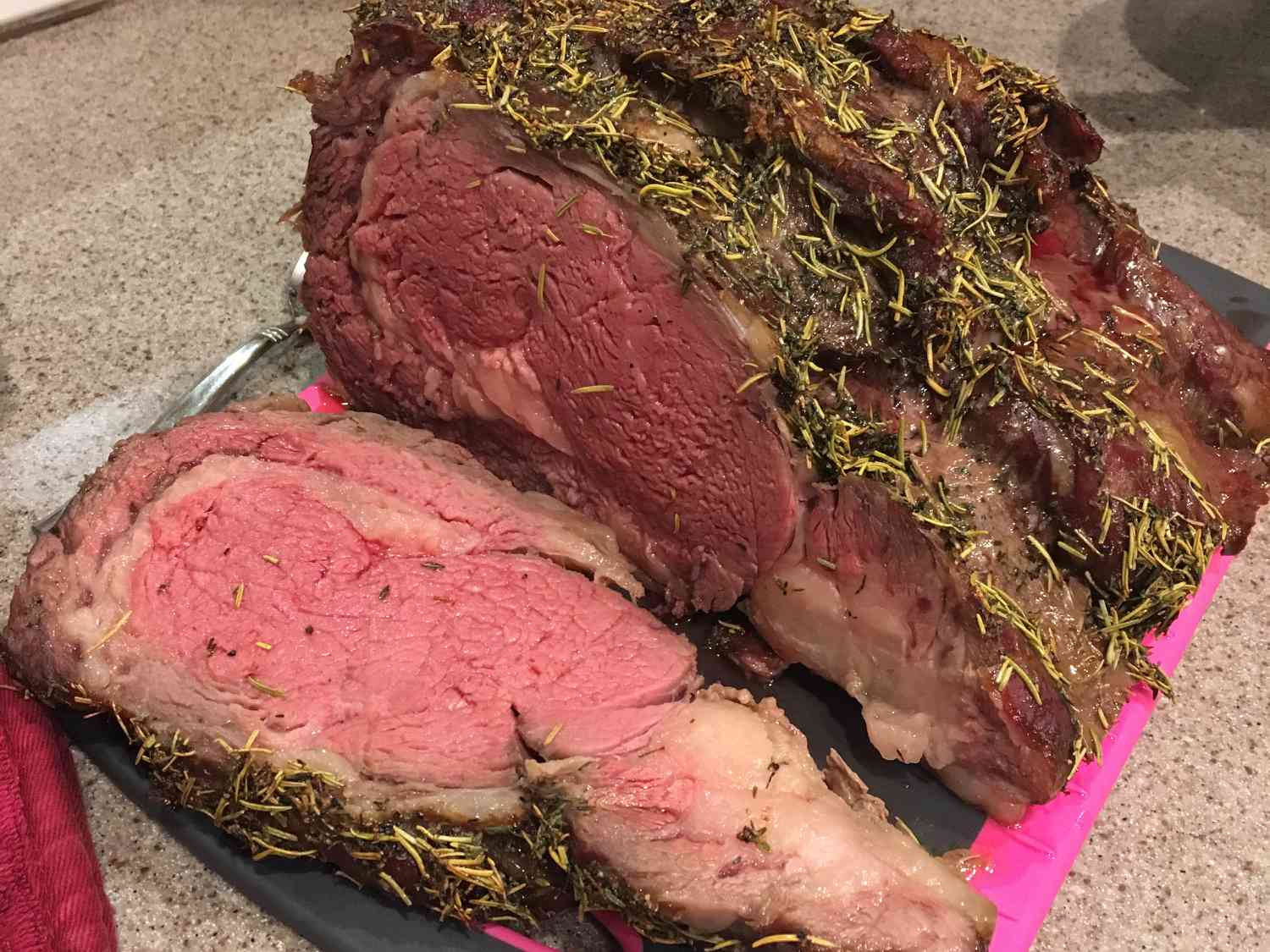
Medium-rare prime rib relies on two key temps:
– 125°F (52°C): The ideal internal temperature for juicy, pink meat.
– 310°F (154°C): The temperature at which the Maillard reaction (browning) occurs, creating a rich, roasty crust.
The dilemma? A hot oven (400°F) gives a great crust but overcooks the edges (165–180°F), while a low oven (200°F) keeps the interior perfect but leaves a pale, flaccid crust.
The Myth of the Sear
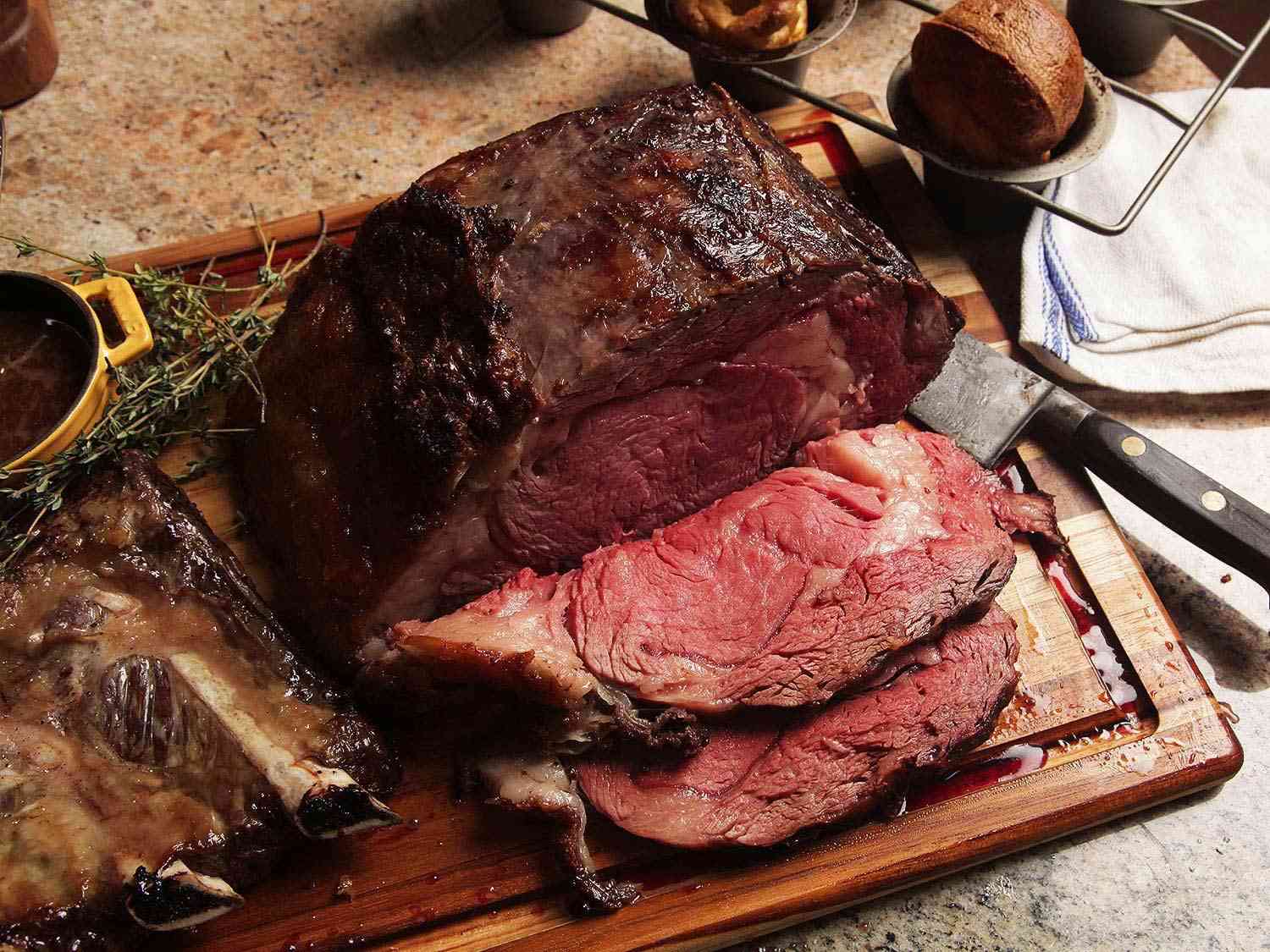
Many home cooks and chefs believe searing locks in juices, but it’s a myth—juices still escape when you flip a seared steak. To test this, I cooked two roasts:
– Roast 1: Seared first (15 minutes in a pan), then roasted.
– Roast 2: Roasted first, then seared (8 minutes in a pan).
The result? Roast 1 lost 1.68% more juices. Why? Raw meat needs time to dry out before browning, overcooking the edges. A pre-roasted roast has a dry surface, so searing is faster and avoids overcooking.
Reverse Sear = Prime Rib Perfection
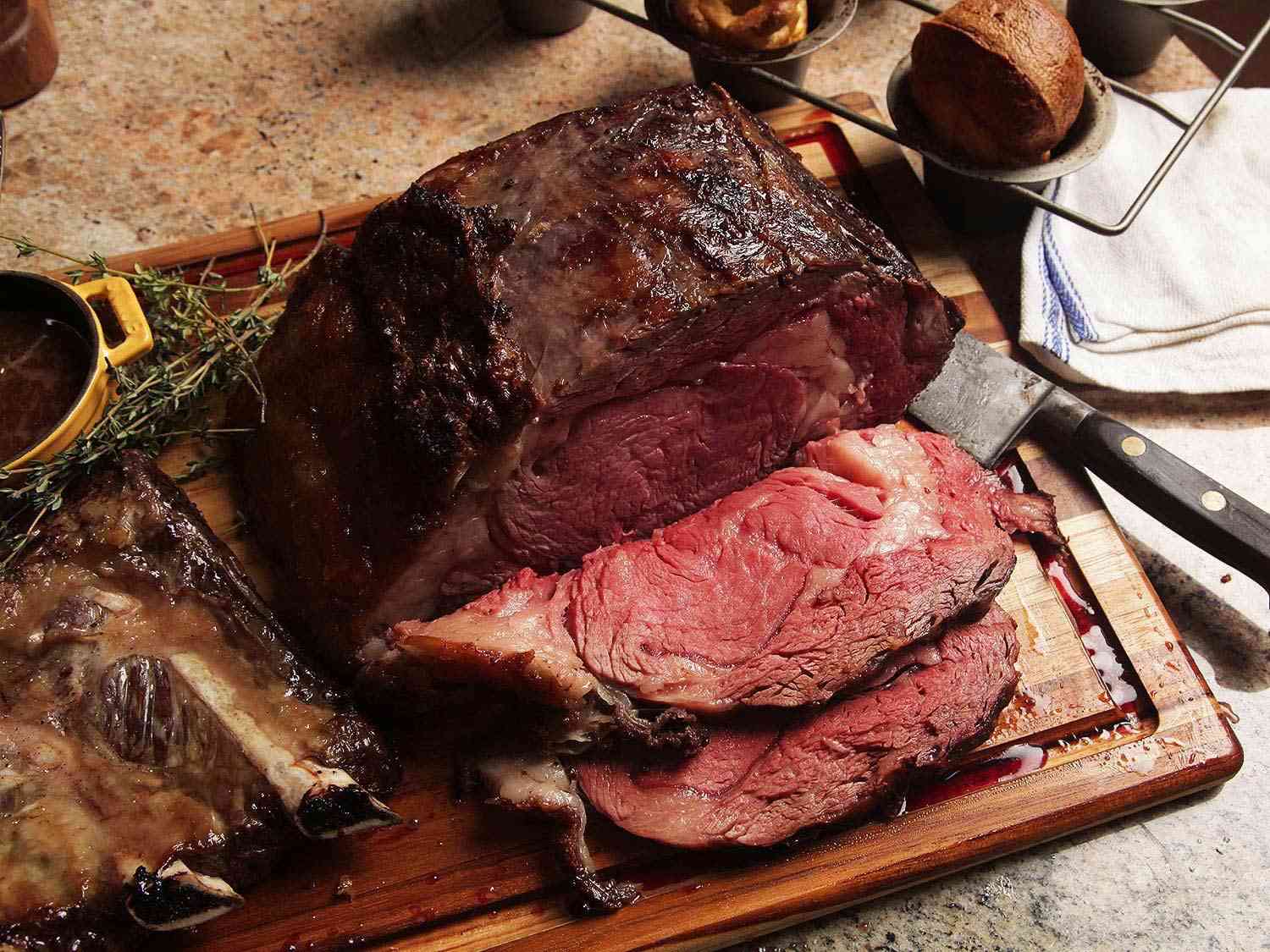
The solution? Reverse searing. This two-stage method combines low-and-slow cooking with a high-heat finish to achieve perfect doneness and a crisp crust.
How It Works
Low-and-slow cook: Roast the beef at 150–250°F until the center reaches your desired doneness. This ensures even doneness from center to edge.
Rest: Remove the roast from the oven, tent with foil, and rest for 30 minutes to 1.5 hours. This allows juices to redistribute.
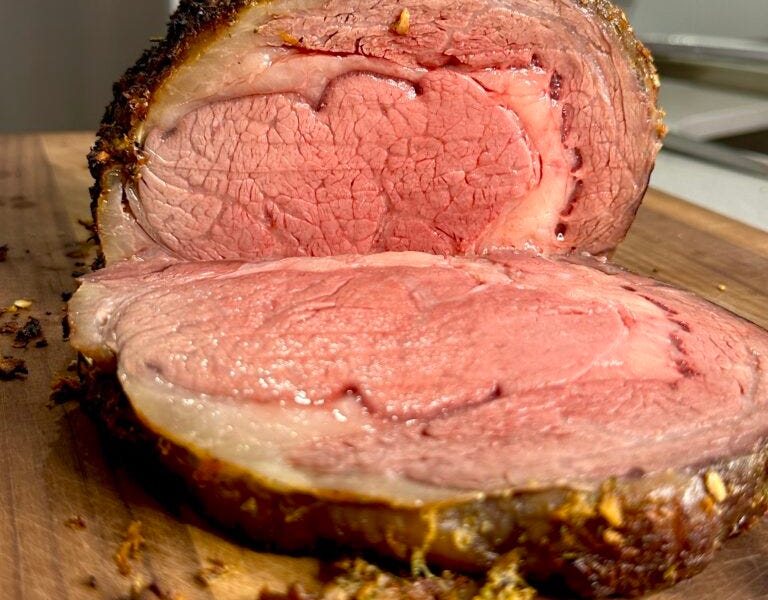
High-heat finish: Preheat the oven to 500–550°F. Roast the beef for 6–10 minutes until the exterior is deep brown and crisp.
The best part? You have a flexible timeline. Once the low-and-slow phase is done, keep the roast covered in foil—It will stay warm for over an hour. Just pop it back in the hot oven 8 minutes before serving!
Recipe Details
Roasted and Reverse Seared Prime RibPrep: 10 mins | Cook: 4 hrs 40 mins | Active: 15 mins | Rest: 30 mins | Total: 5 hrs 20 mins | Serves: 3–12
Ingredients
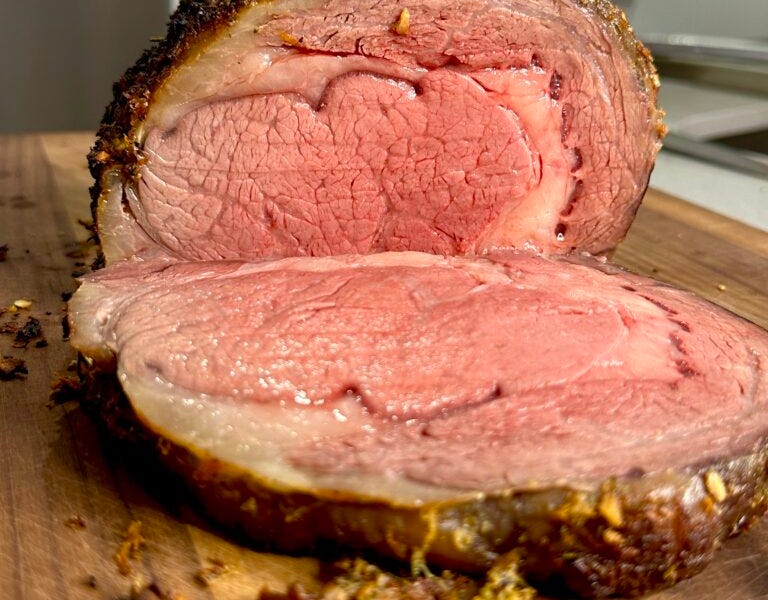
1 standing rib roast (prime rib), 3–12 pounds (1.3–5.4 kg)
Kosher salt and freshly ground black pepper
Directions
Preheat and season: Set your oven to the lowest temperature (150–250°F). Season the roast generously with salt and pepper. Place it on a V-rack in a roasting pan (fat cap up).
Low-and-slow cook: Roast until the center reaches your desired doneness on an instant-read thermometer:
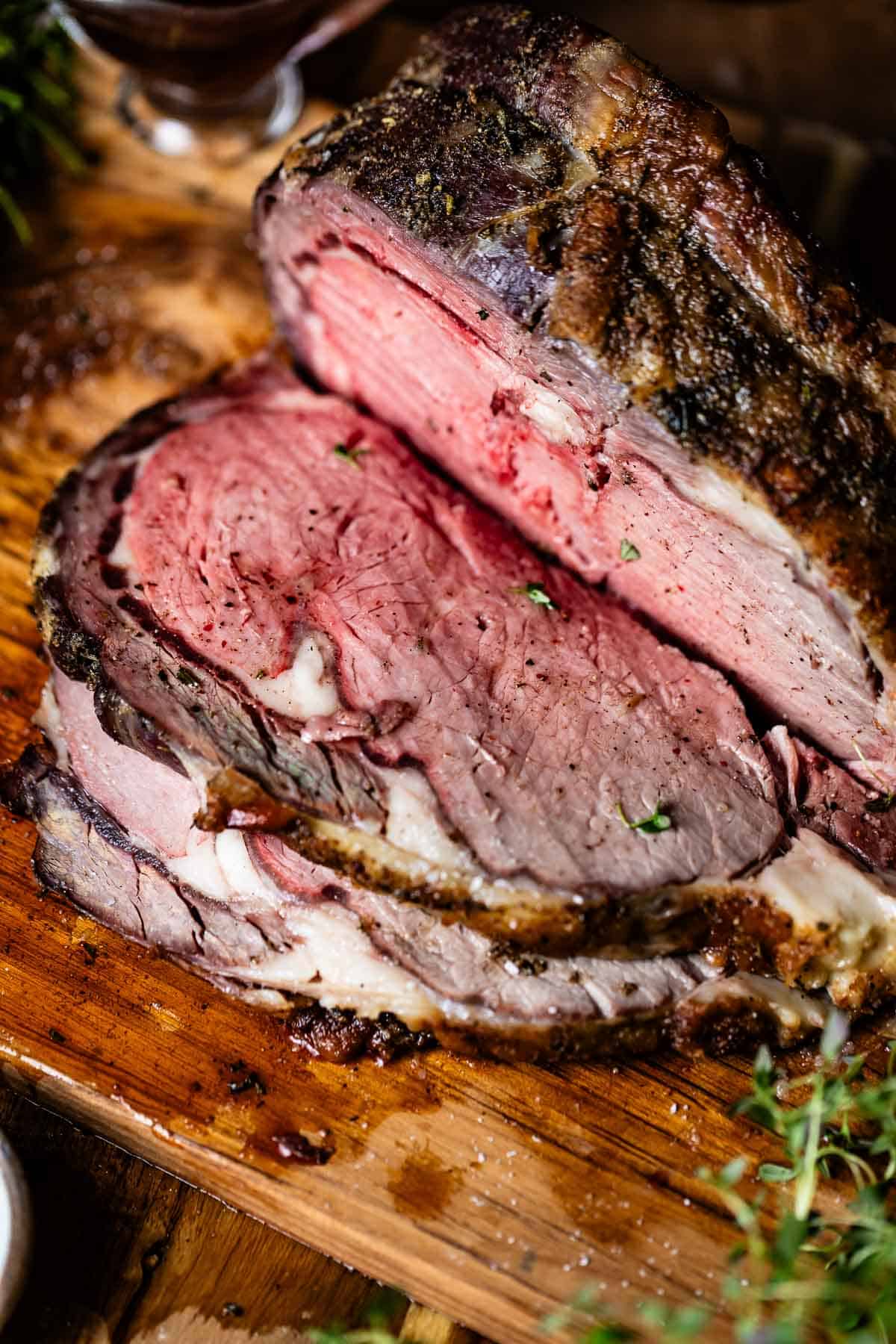
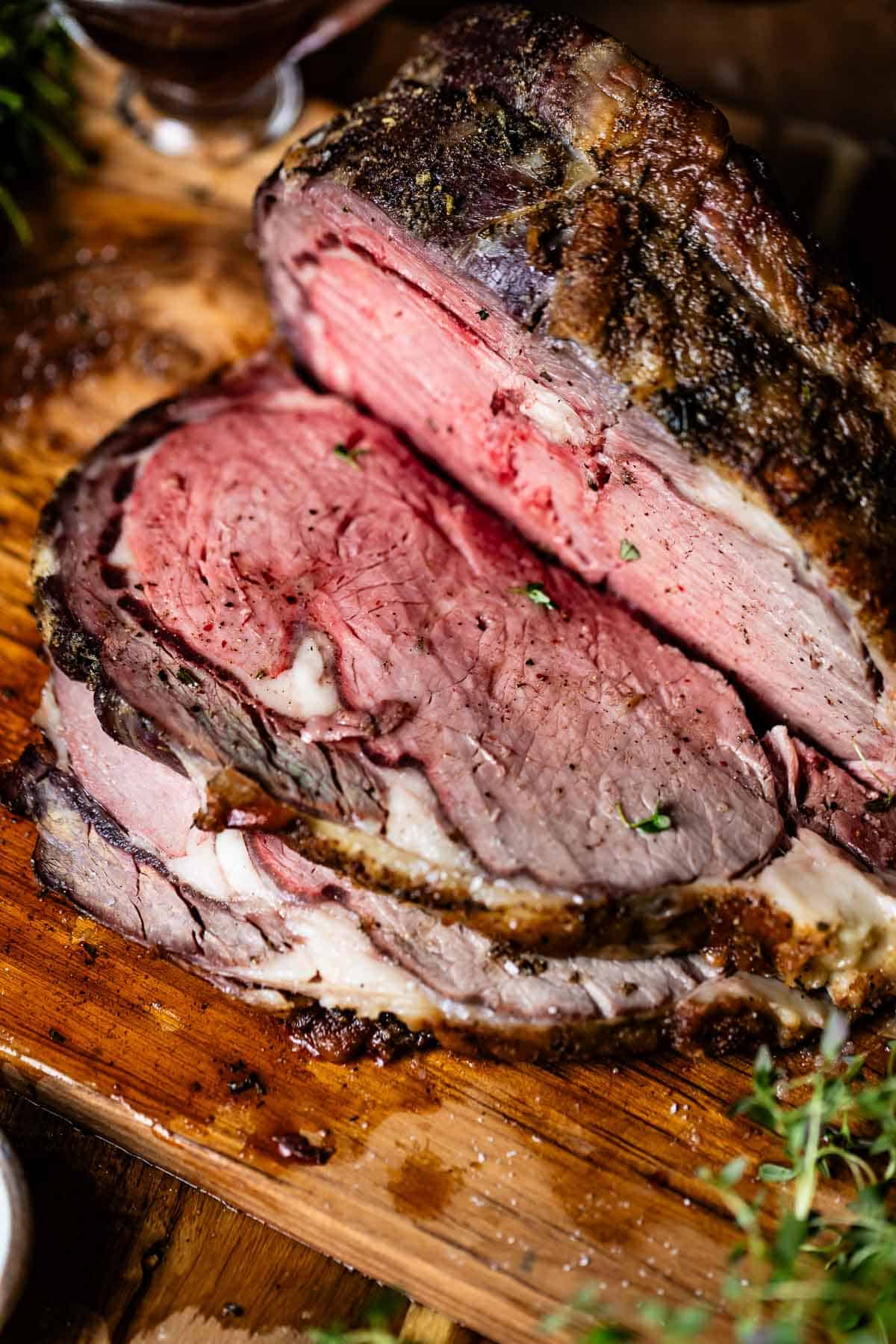
Rare: 120–125°F (49–52°C)
Medium-rare: 130°F (54°C)
Medium: 135°F (57°C)Time varies: 5.5–6.5 hours at 150°F, 3.5–4 hours at 250°F.
Rest and preheat: Remove the roast from the oven, tent with foil, and rest for 30 minutes to 1.5 hours. Preheat the oven to 500–550°F.
Crisp the crust: Remove the foil and roast the beef for 6–10 minutes until the exterior is deep brown and crisp. Carve and serve immediately.
Special Equipment
Roasting pan with V-rack
Instant-read thermometer
Notes
Dry-aging: For best results, use a dry-aged prime-grade or grass-fed roast.
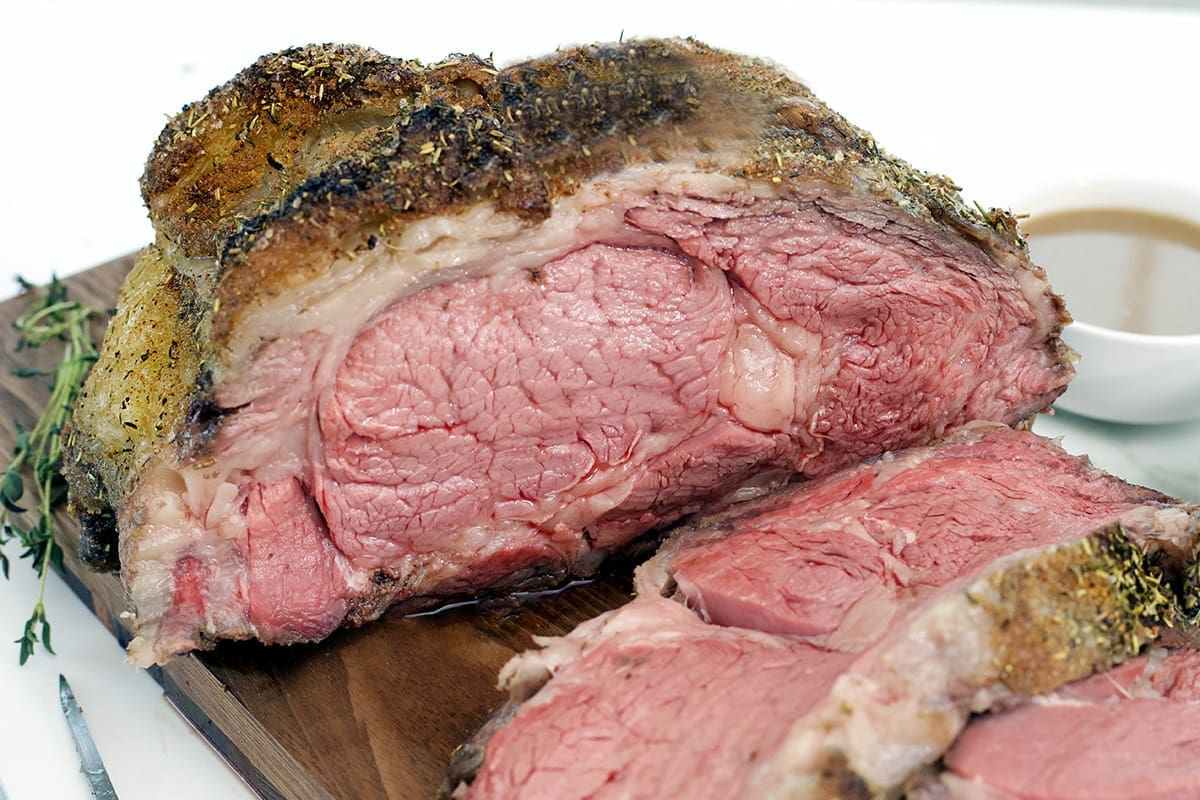
Crust tip: Air-dry the roast uncovered in the fridge overnight before cooking for a crispier crust.
Timing: If the roast is ready early, reheat it at 200°F for 45 minutes before the final sear.
Nutrition Facts (per serving)
Nutrient
Amount
% Daily Value
Calories
968
—
Total Fat
77g
98%
Saturated Fat
31g
155%
Cholesterol
237mg
79%
Sodium
696mg
30%
Total Carbohydrate
0g
0%
Protein
65g
—
% Daily Value based on a 2,000-calorie diet.


